Understanding Zone 4A Climate Challenges in Wichita
Wichita sits squarely in IECC Climate Zone 4A, a region characterized by hot summers, cold winters, and significant temperature swings between seasons. This climate zone demands more from your home's thermal envelope than many homeowners realize. The temperature fluctuations create constant pressure on your insulation system, forcing it to work harder to maintain consistent indoor comfort.
Most homeowners focus exclusively on R-value when evaluating insulation options, but this metric only tells half the story. R-value measures resistance to heat transfer through the insulation material itself, yet it does nothing to address air leakage. In Zone 4A, where heating and cooling costs represent a substantial portion of annual utility expenses, uncontrolled air movement can undermine even the highest R-value insulation. A home with excellent R-value but poor air sealing will still lose conditioned air through cracks, gaps, and poorly sealed penetrations.
The Air Sealing Problem: Why R-Value Alone Falls Short
Traditional fiberglass batts and blown-in cellulose insulation excel at slowing conductive heat transfer, but they are remarkably poor at stopping air infiltration. Air can move freely around, under, and through these materials, carrying heat or cool air directly out of your home. In a typical Wichita home, air leakage accounts for 25 to 40 percent of heating and cooling losses, regardless of the R-value rating on your insulation package.
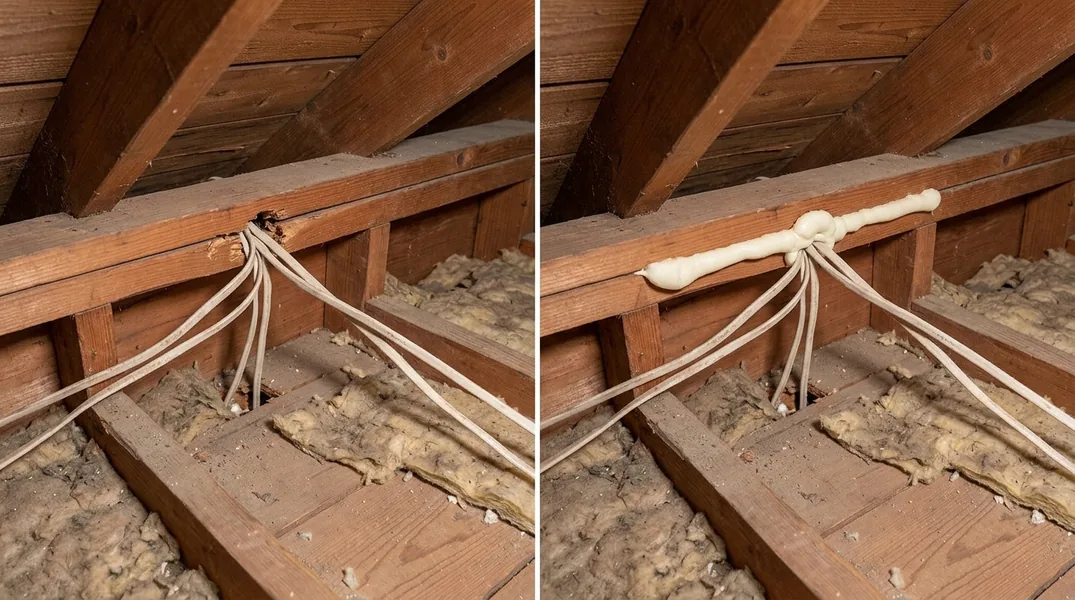
Consider a common scenario: your attic has R-38 blown-in insulation, meeting or exceeding code requirements. However, that same attic has gaps around electrical boxes, unsealed penetrations where utilities enter, and air leakage at the rim joist and band board. Conditioned air escapes through these pathways at a rate that no amount of additional R-value can compensate for. This is where Closed Cell Spray Foam Insulation changes the equation. Spray foam simultaneously insulates and air seals in a single application, creating a continuous thermal and air barrier that traditional materials cannot match.
Crawl Space and Pier-and-Beam Insulation: A Zone 4A Priority
Homeowners often overlook their crawl spaces and pier-and-beam foundations when planning insulation upgrades, yet these areas represent one of the largest sources of energy loss in Wichita homes. In Zone 4A, where winter temperatures regularly drop below freezing, an uninsulated or poorly insulated crawl space becomes a direct conduit for cold air infiltration into living spaces. Cold floors are not merely a comfort complaint; they indicate that your home's thermal envelope is failing.
The best insulation for crawl space applications combines high R-value with complete air sealing. Open Cell Spray Foam Insulation applied to crawl space walls and band boards creates a continuous barrier that eliminates drafts and cold spots. Unlike traditional crawl space insulation methods that rely on vapor barriers and fiberglass batts, spray foam adheres directly to rim joists, band boards, and foundation walls, leaving no gaps for air to infiltrate. For homes with pier-and-beam construction, this approach is particularly effective because the exposed underside of the home is fully protected.
Many crawl space spray foam projects in the region also address moisture control, a critical concern in Zone 4A where humidity levels fluctuate seasonally. Spray foam's closed-cell variants provide inherent moisture resistance, protecting your home from both air infiltration and humidity-related damage.
Cold Floors and Comfort: How Air Sealing Solves the Problem
If you live in Wichita and experience consistently cold floors despite having insulation in your crawl space, air leakage is almost certainly the culprit. Cold floors indicate that warm air is escaping from your living spaces while cold air is entering from below. This creates an uncomfortable thermal gradient that no amount of thermostat adjustment can fully resolve. The solution is not more insulation in the traditional sense; it is comprehensive air sealing that stops the movement of conditioned air.
Spray foam insulation addresses cold floors by sealing the pathway through which cold air enters. When applied to crawl space walls, band boards, and rim joists, it creates an unbroken thermal envelope that prevents temperature transfer from the unheated crawl space into your home. Homeowners often report that cold floors disappear entirely within weeks of having cold floors insulation properly installed. Beyond comfort, this improvement translates directly into lower heating costs during winter months and more consistent cooling performance in summer.
Spray Foam Versus Traditional Insulation in Zone 4A
The fundamental difference between spray foam and traditional insulation lies in how each material performs in a Zone 4A climate. Fiberglass batts and blown cellulose provide R-value but require perfect installation to minimize air leakage. Any compression, settling, or gap in coverage reduces their effectiveness. In a real-world installation, achieving perfect coverage is nearly impossible, especially in complex areas like rim joists, around electrical penetrations, and in corners.
Attic Spray Foam Insulation and Wall & Injection Foam Insulation eliminate this installation variability. Spray foam expands to fill every cavity, gap, and void, creating an air-tight seal that cannot be achieved with batts or blown insulation. This comprehensive air sealing is especially valuable in older homes common throughout Wichita, where settling, wood shrinkage, and age have created numerous air leakage pathways.
For Zone 4A homeowners, the choice between closed-cell and open-cell spray foam depends on specific application needs. Closed-cell foam offers higher R-value per inch and superior moisture resistance, making it ideal for crawl spaces and exterior applications. Open-cell foam is more cost-effective for interior attic applications where moisture is less of a concern and R-value requirements are moderate. Both options significantly outperform traditional insulation when air sealing is considered.
Getting Your Wichita Home Properly Sealed and Insulated
If you are uncertain whether your home is adequately sealed and insulated for Zone 4A, the first step is a professional energy audit. Wichita Spray Foam Insulation offers free estimate consultations that include a thorough assessment of your home's thermal envelope. Our team identifies air leakage pathways, evaluates existing insulation, and recommends a customized solution that addresses both R-value and air sealing needs.
The pricing for spray foam insulation varies based on the scope of work, materials used, and specific areas being treated. Rather than assuming that spray foam is prohibitively expensive, many homeowners find that the energy savings, improved comfort, and long-term durability justify the investment. Spray foam insulation does not settle, compress, or degrade over time, meaning your air seal and R-value remain consistent for decades.
Whether you need pier and beam insulation to eliminate cold floors, attic sealing to reduce heating and cooling costs, or comprehensive energy efficiency upgrades, Wichita Spray Foam Insulation has the expertise to deliver results. Contact us today at (316) 618-7858 to schedule your free estimate and discover how proper air sealing and insulation can transform your home's comfort and efficiency in Zone 4A.
Looking for a professional spray foam insulation contractor in Wichita? Wichita Spray Foam Insulation responds fast for all your spray foam insulation needs.
Get a Free Quote