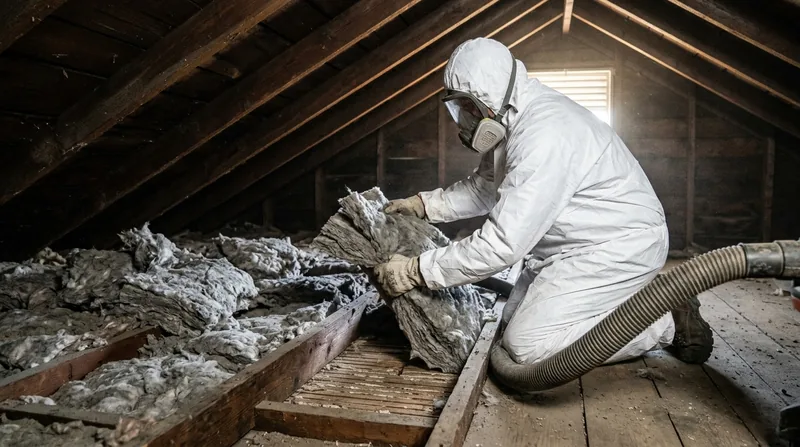




Insulation Removal in Wichita is the necessary first step before any retrofit spray foam installation. Wichita's housing stock spans nearly a century, from 1920s bungalows in College Hill and Riverside to the post-war ranches that dominate the mid-city landscape, and from newer subdivisions in Derby, Andover, and Maize that stretch across four counties. Many of these homes contain old fiberglass batts, blown-in cellulose, or failed spray foam that has settled, compressed, or degraded after decades of the region's humid summers and cold, windy winters. Before we install new closed cell or open cell spray foam, we remove the old material completely, inspect the substrate for moisture or contamination, and prepare the cavity for a clean installation. This process is not glamorous, but it is the difference between a retrofit that lasts and one that fails within a few years.
Why Insulation Removal Matters in Wichita's Climate
Wichita sits in IECC climate zone 4A, a region of extreme seasonal swings. Summers are humid and hot; winters are cold and relentlessly windy. Old insulation in attics, walls, and crawl spaces takes the full force of these cycles. Fiberglass batts compress under their own weight and settle away from the top plate, leaving gaps where air leaks directly into the conditioned space. Blown-in cellulose absorbs moisture from summer humidity, loses R-value, and becomes a thermal sieve by winter. Failed spray foam, whether improperly installed or simply aged, can shrink, develop voids, or off-gas indefinitely if the original installation lacked proper ventilation or used the wrong ratio.
- Old insulation loses effectiveness after 15 to 25 years of seasonal temperature swings and moisture exposure.
- Settled or compressed material creates thermal bridging and air leaks that drive heating and cooling costs higher each season.
- Contaminated insulation (mold, rodent nesting, water damage) must be removed before new foam can be installed safely.
- A clean substrate allows proper foam adhesion and prevents voids that would compromise the entire thermal barrier.
Removing failed insulation is not optional; it is the foundation of a retrofit that performs.
Key info: Many Wichita homes built in the 1950s and 1960s have attics with original fiberglass batts that are now compressed and useless. Before spray foam goes in, that material must come out completely. The same applies to crawl spaces under ranches and older bungalows, where decades of moisture and temperature cycling have degraded whatever insulation was installed decades ago.
For more information on what happens after removal, see our page on Attic Spray Foam Insulation or Insulation Replacement and Re-Insulation.
How We Handle Insulation Removal in Wichita
Removal is a methodical process, not a demolition. We identify what material is present, assess its condition, plan safe access, and remove it without spreading contamination or creating air quality problems in the home. Depending on the scope, we may use a vacuum extraction system (for blown-in cellulose or fiberglass), hand removal (for batts or rigid foam), or a combination. We contain dust and debris, dispose of material legally, and document the substrate before new foam is installed. The goal is a clean, dry, accessible cavity ready for spray foam to bond properly.
- We inspect the attic, wall, or crawl space to identify insulation type, moisture, contamination, and structural condition.
- We establish a safe work zone with proper ventilation and containment to prevent dust and debris from entering living spaces.
- We remove old insulation using equipment and techniques matched to the material and the access available.
- We inspect the substrate for leaks, rot, mold, or other damage that must be addressed before new foam is installed.
- We dispose of removed material in compliance with local regulations and recycling guidelines.
Once the cavity is clean and dry, we are ready to install new spray foam with confidence that it will bond properly and perform for decades.
Example: A 1,200-square-foot attic in a 1960s ranch in Wichita typically contains 4 to 6 inches of compressed fiberglass. We remove it completely, vacuum and wipe the top plates and rafters, check for roof leaks or moisture, and then install 5.5 inches of open cell foam for R-19.8 or closed cell foam for R-33 depending on the homeowner's goals. The removal takes 4 to 6 hours; installation follows the next day after the substrate has fully dried.
Learn more about the foam types we install by visiting our Closed Cell Spray Foam and Open Cell Spray Foam pages.
Insulation Removal Methods for Wichita Properties
| Method | Description | Best For |
|---|---|---|
| Vacuum Extraction | High-powered vacuum system pulls blown-in cellulose or fiberglass into a containment truck, minimizing dust and airborne fiber. | Blown-in cellulose or loose fiberglass in attics; fastest method for large volumes. |
| Hand Removal | Manual removal of batts, blocks, or sheets using hand tools and containment. Slower but precise and suitable for tight spaces. | Fiberglass batts, rigid foam boards, or areas where access is limited or substrate is fragile. |
| Foam Demolition | Removal of existing spray foam using mechanical tools and vacuum containment. Requires care to avoid damage to substrate. | Failed or poorly installed spray foam that must come out before new foam is applied. |
| Substrate Cleaning | After insulation removal, we wipe or brush surfaces to remove dust, debris, and residual material, then allow substrate to dry fully. | All removal jobs; essential step before new spray foam installation to ensure proper adhesion. |
Insulation Removal Cost in Wichita: What to Expect
The cost of insulation removal in Wichita depends on the area to be cleared, the type of material present, how accessible it is, and whether the substrate needs repair or remediation. A straightforward attic removal of settled fiberglass or cellulose in a 1,200-square-foot space typically starts at $950 and may reach $1,500 to $2,200 depending on the depth of material, the condition of the substrate, and the disposal requirements. Crawl space removal costs more because access is tighter and the work is slower. Wall cavity removal is priced by the linear footage of wall and the type of insulation. The single biggest variable is whether the substrate is clean and dry or requires repair before new foam can be installed.
- Attic removal of fiberglass or cellulose typically starts at $950 for a small to medium space and scales with square footage.
- Crawl space removal costs more per square foot because of limited access and slower manual work.
- Wall or injection foam cavity removal is quoted by linear footage and the cavity type.
- If the substrate shows water damage, rot, or mold, remediation may be needed before new foam is installed, adding cost.
- Disposal and recycling of old insulation material is included in the removal price; no surprise fees at the end.
We provide a written estimate with R-value and thickness specifications for the new foam that will follow. Visit our Pricing page for more detail on what drives costs across different job types.
What to Look for When Hiring an Insulation Removal Contractor Near Wichita
Not all contractors who remove insulation are equipped or experienced enough to prepare a substrate correctly for spray foam. Some will pull out the old material and leave dust, debris, and moisture behind. Others will not inspect for leaks or mold. Still others will rush through the work and promise immediate foam installation without allowing the substrate to dry. When you call a contractor for insulation removal near Wichita or in surrounding areas like Derby, Andover, or Maize, ask these questions: What insulation type do you see in my home? How will you contain dust and debris? Will you inspect the substrate for moisture, leaks, or damage? Can you provide references from recent removal jobs? Do you carry full insurance, and can you provide a certificate of insurance? Will you provide a written estimate with a timeline and disposal plan?
- Verify that the contractor carries full insurance and ask for a certificate of insurance before any work begins.
- Request at least two or three written estimates that detail the scope, the removal method, the disposal plan, and the timeline.
- Ask for references from homeowners or builders for whom they have removed insulation and installed new foam in the past year.
- Confirm that the contractor will inspect the substrate for moisture, leaks, rot, or mold and will not install new foam until the cavity is dry.
- Understand what permits or inspections, if any, apply to your address; your local building department can tell you what is required.
We are fully insured and have been removing and replacing insulation in Wichita and the surrounding region since 2014. We inspect every substrate before new foam is installed and we do not spray over wet, contaminated, or leaking surfaces. If you have questions about your home or want a free estimate, call us at (316) 618-7858 or visit our Contact page to request an appointment.
Insulation Removal in Wichita: Pricing Guide
| Service | Price | Details |
|---|---|---|
| Attic Insulation Removal | Starting at $950 | Includes vacuum extraction or hand removal, substrate inspection, and cleanup for typical 1,000 to 1,500 sq ft attic space |
| Crawl Space Insulation Removal | Starting at $1,200 | Limited access and slower manual work; cost scales with square footage and substrate condition assessment |
| Wall Cavity Removal | Starting at $15 per linear foot | Injection foam or blown-in cavities; quoted by wall length and cavity type after site assessment |
| Substrate Remediation | On estimate | If water damage, rot, or mold is found during removal, repair scope must be assessed on site before new foam is installed |
| Disposal and Recycling | Included | All removed insulation material is disposed of legally and recycled where possible; no additional fees |
| Free Written Estimate | Free | Response within 24 hours at (316) 618-7858; includes R-value and thickness specs for new foam to follow |
Indicative pricing, the exact cost depends on square footage, finish, and site access. Free personalized estimate within 24h at (316) 618-7858.


