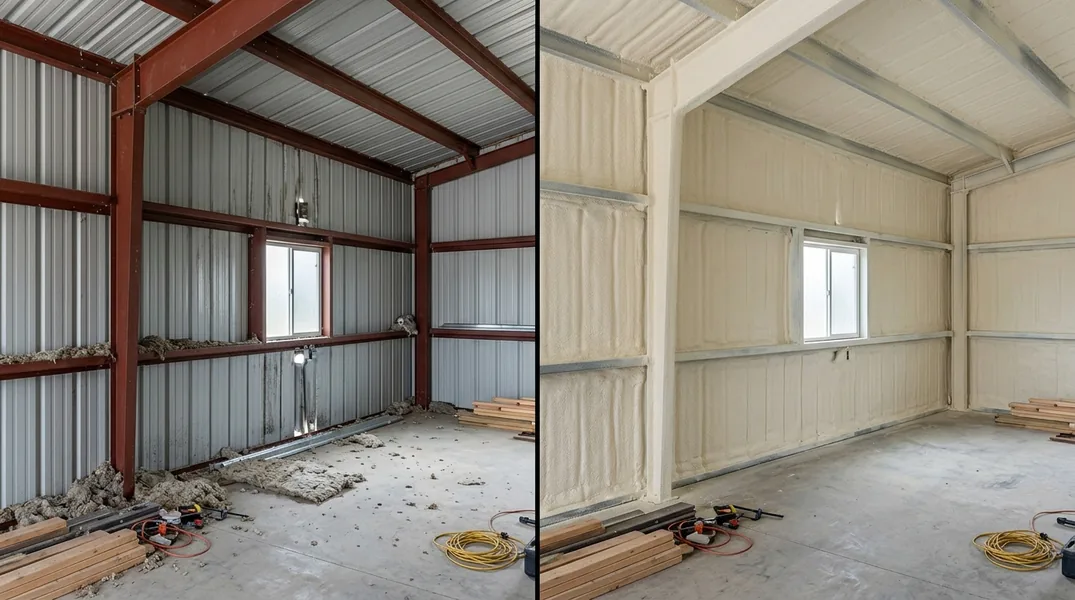
Why Wichita's Vintage Ranches Need Modern Insulation Solutions
The 1950s through 1970s were Wichita's golden age as America's Air Capital. Aircraft manufacturing boomed, and so did residential construction. Thousands of charming ranch-style homes sprouted across the city, with their characteristic low-pitched roofs, open floor plans, and efficient layouts that seemed perfect for Kansas living. Today, these vintage properties are beloved by homeowners who appreciate their solid construction and classic character.
However, many of these Air Capital era ranches were built with insulation standards that are simply no longer adequate for modern energy costs and Kansas weather extremes. Original fiberglass batts have settled and compressed over decades. Gaps around penetrations have widened. Attic ventilation wasn't designed with today's cooling demands in mind. The result is higher utility bills, uneven temperatures, and homes that struggle to maintain comfort during Wichita's scorching summers and cold winters. Upgrading your attic insulation isn't just about comfort; it's about protecting your investment and reclaiming efficiency.
Spray Foam vs. Blown-In Insulation: Which Works Best for Older Attics
Attic Spray Foam Insulation and blown-in insulation are the two most common retrofit solutions for vintage homes, but they perform very differently in practice. Blown-in insulation, typically cellulose or fiberglass, is loose material that gets pneumatically installed into attic cavities. It's fast to install and offers decent R-value per inch. However, blown-in insulation settles over time, especially in older homes where joists may not be perfectly level. Gaps form around rafters, pipes, wiring, and other penetrations. Air can still infiltrate around these weak points, undermining the insulation's effectiveness.
Spray foam, by contrast, expands as it's applied, filling every nook, crack, and cavity in your attic. It creates an air-tight seal that doesn't settle or compress. For Wichita homeowners dealing with the irregular framing and quirky geometry of 1950s-70s ranches, this airtight performance is transformative. Spray foam also adheres to surfaces, so it won't shift if your roof flexes during temperature swings. The trade-off is upfront cost, but the long-term energy savings and comfort improvements often justify the investment within five to seven years.
Spray Foam vs. Fiberglass: Why Modern Homes Deserve Better
Fiberglass batts were the standard insulation material when your ranch was built, and they're still widely used today because they're affordable and easy for DIYers to install. However, fiberglass has inherent limitations that become especially problematic in aging homes. Fiberglass relies on trapped air pockets for insulation value, but it does nothing to stop air leakage. In fact, air can flow right through fiberglass, which means your heating and cooling system has to work harder to condition the air that's escaping through gaps and cracks.
Additionally, fiberglass batts require proper installation to perform well. If they're compressed, wet, or not fitted snugly around obstacles, their R-value drops significantly. In older Wichita attics, where original batts have degraded or shifted, performance is often 20 to 30 percent lower than the original specification. Spray foam eliminates these variables. It creates a continuous thermal and air barrier, maintains its R-value over time, and doesn't degrade like fiberglass. For homeowners serious about energy efficiency and lasting comfort, spray foam is the clear winner over fiberglass for attic retrofits.
Spray Foam vs. Cellulose: Understanding the Trade-offs
Cellulose insulation is another popular blown-in option, made from recycled paper treated with fire retardants. It offers good R-value and appeals to environmentally conscious homeowners. However, cellulose shares the same settling problem as fiberglass blown-in insulation. It also has a higher moisture sensitivity than spray foam. In humid climates or attics prone to condensation, cellulose can absorb moisture, which reduces its insulating properties and creates conditions for mold growth. Kansas summers can be humid, and air conditioning systems in older homes sometimes create condensation problems, making cellulose a riskier choice for attic applications.
Closed Cell Spray Foam Insulation is particularly effective in moisture-prone environments because it's hydrophobic and won't absorb water. It also provides superior air sealing and higher R-value per inch, which matters when attic space is limited in ranch homes with lower roof pitches. While cellulose may cost less upfront, spray foam's durability, moisture resistance, and air-sealing performance make it the better long-term investment for vintage Wichita properties.
Best Insulation for Attic in Historic Wichita Ranches: Closed Cell vs. Open Cell
When you decide that spray foam is right for your Air Capital era ranch, the next choice is between closed cell and open cell formulations. Closed cell spray foam is denser and has a higher R-value per inch, typically around 6.5 to 7 R-value per inch. It's also impermeable to moisture and provides excellent structural support. Closed cell is ideal if your attic has any history of moisture problems, if you're in a humid region, or if you want maximum insulation in a limited space. Many Wichita homeowners with 1950s-70s ranches choose closed cell because these older homes often have less attic depth than modern construction, and closed cell delivers more R-value in fewer inches.
Open Cell Spray Foam Insulation is lighter, more flexible, and costs less than closed cell. It has an R-value of around 3.5 to 3.8 per inch, so you need more thickness to achieve the same R-value. Open cell is breathable, which some builders prefer for attics that need to manage moisture vapor naturally. However, for retrofit applications in older homes where air sealing is a primary goal, closed cell usually delivers better results. The choice ultimately depends on your attic's condition, your budget, and your energy goals. A professional assessment can help you determine which is best for your specific situation.
Attic Spray Foam Insulation Cost in Wichita: What to Budget
Cost is a legitimate consideration when planning an attic insulation upgrade. Spray foam typically costs more per square foot than blown-in fiberglass or cellulose, with pricing generally ranging from $1.50 to $3.00 per board foot depending on the type of foam, your attic's size and complexity, and local labor rates. For an average-sized attic in Wichita, you might expect a total investment of $2,500 to $5,000 or more. That sounds substantial, but consider the context. Energy savings from improved insulation and air sealing typically amount to 15 to 25 percent of heating and cooling costs, which translates to $500 to $1,500 annually for many homeowners. Over a decade, those savings compound significantly.
Moreover, spray foam adds durability and comfort benefits that blown-in insulation doesn't provide. You won't need to add more insulation in five or ten years because it settled. Your home will be quieter, more comfortable, and less prone to drafts. Many homeowners also see improved home value and lower insurance premiums. If you're considering an attic insulation project, request a free estimate from Wichita Spray Foam Insulation. We'll assess your attic, discuss your goals and budget, and provide a transparent quote so you can make an informed decision. Call us at (316) 618-7858 to schedule your consultation.
Looking for a professional spray foam insulation contractor in Wichita? Wichita Spray Foam Insulation responds fast for all your spray foam insulation needs.
Get a Free Quote