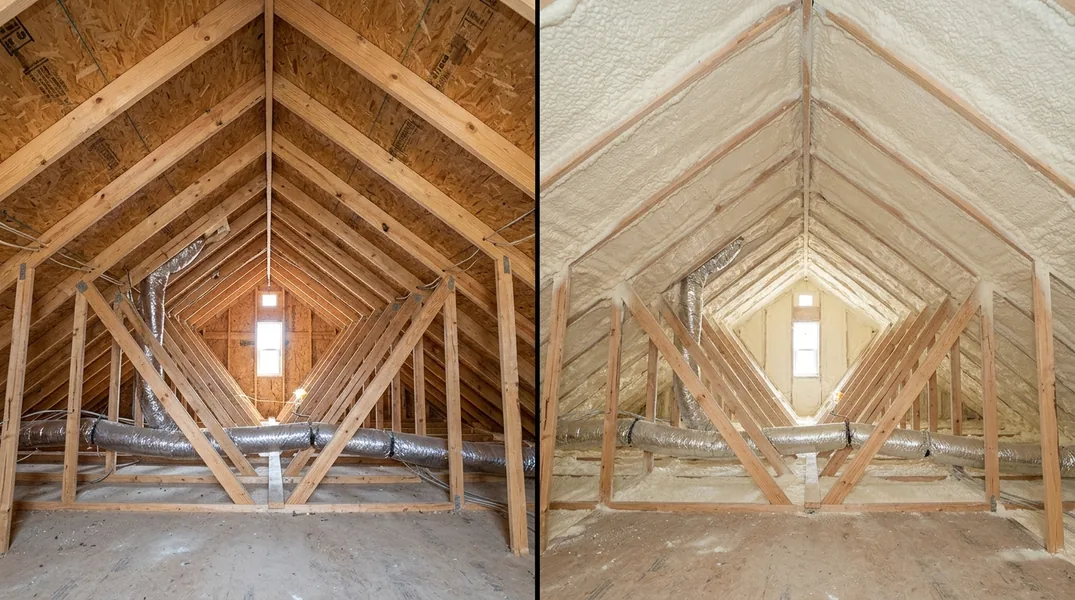
Understanding Spray Foam Types: Open Cell vs Closed Cell
When you're considering Attic Spray Foam Insulation for your home in Wichita, one of the first decisions you'll face is whether to install open cell or closed cell spray foam. These two types of insulation look similar when applied, but they have fundamentally different structures and performance characteristics that make each one suitable for different applications and budgets.
Open cell spray foam has a structure filled with tiny air pockets that are not completely sealed. This gives it a softer, more flexible feel, similar to a sponge. Closed cell spray foam, by contrast, has cells that are completely sealed and packed tightly together, creating a much denser, more rigid material. Understanding these structural differences is the first step toward making an informed decision about which type of spray foam attic insulation will best serve your home's needs.
Open Cell Spray Foam: Benefits and Limitations
Open Cell Spray Foam Insulation is often the more affordable option for homeowners looking to improve their attic insulation. Because the cells are not completely sealed, the material is lighter and requires less chemical material to produce, which translates to lower material costs. Open cell foam also offers excellent sound dampening properties, making it a popular choice for homeowners who want to reduce noise transmission through their attic spaces. Additionally, open cell foam is vapor permeable, meaning moisture can pass through it, which can be beneficial in certain climate conditions.
However, open cell foam does have some important limitations that homeowners need to understand. Because the cells are open, the material is more permeable to air and moisture, which means it doesn't provide the same air sealing benefits as closed cell alternatives. In humid environments or areas prone to moisture issues, open cell foam may not perform as effectively at preventing moisture infiltration. The lower R-value per inch (typically around 3.5 to 3.6 per inch) also means you may need a thicker application to achieve the same insulation performance as closed cell options.
Closed Cell Spray Foam: Superior Performance and Durability
Closed Cell Spray Foam Insulation represents the premium choice for homeowners seeking maximum performance from their attic spray foam insulation. Because the cells are completely sealed, closed cell foam creates an exceptional air barrier and moisture barrier, making it ideal for creating Wichita homes with sealed attic insulation. This dense structure provides an R-value of approximately 6 to 7 per inch, which is nearly double that of open cell foam. This superior insulation value means you can achieve better energy efficiency with less material, and it also provides enhanced structural support to your roof.
The closed cell structure offers additional benefits beyond insulation. It provides excellent resistance to air infiltration, which is one of the leading causes of energy loss in homes. Closed cell foam also resists moisture penetration much more effectively than open cell alternatives, making it particularly valuable in climates with high humidity or in attics that may be exposed to water intrusion. The rigidity of closed cell foam also adds structural integrity to your attic, which can be especially beneficial in areas prone to high winds or severe weather. The primary trade-off is that closed cell foam typically costs more than open cell options, though many homeowners find the long-term energy savings justify the initial investment.
Why Wichita Homeowners Choose Unvented Attic Spray Foam Solutions
Wichita's climate presents unique challenges for attic insulation. The region experiences hot summers, cold winters, and variable humidity levels throughout the year. This is why many Wichita homeowners are turning to unvented attic spray foam solutions. Traditional vented attics can allow unconditioned air to move between your living spaces and the attic, which reduces energy efficiency and can lead to temperature imbalances throughout your home.
When you apply spray foam insulation directly to the underside of your roof deck, you create what's known as a sealed attic insulation system. This approach keeps your attic conditioned as part of your home's thermal envelope, meaning the temperature and humidity in your attic remain more consistent with the rest of your house. This is particularly effective in Wichita because it prevents the extreme temperature swings that can occur in vented attics during summer and winter. A sealed attic also reduces the load on your HVAC system, since you're no longer trying to condition air that's escaping into an unconditioned space. The result is improved comfort, better energy efficiency, and lower utility bills throughout the year.
Attic Spray Foam Insulation Cost in Wichita: What to Budget
Cost is naturally a significant factor when homeowners are deciding whether to invest in spray foam insulation for their attics. The pricing for spray foam insulation projects varies based on several factors, including the size of your attic, the type of foam you choose, the depth of application needed, and any additional preparation work required. Open cell foam typically ranges from lower cost per square foot compared to closed cell options, but remember that you may need a thicker application to achieve equivalent R-value performance.
Rather than trying to estimate costs on your own, the best approach is to reach out to Wichita Spray Foam Insulation for a professional assessment. Every attic is different, and factors like existing insulation, air leaks, ventilation configuration, and your specific energy efficiency goals all affect the final cost. We recommend calling us at (316) 618-7858 or requesting a free estimate so you can understand the actual investment required for your particular situation. During this consultation, our team can also help you understand the long-term return on investment through energy savings, which often makes the upfront cost of premium spray foam insulation very reasonable when spread over the lifespan of the product.
Choosing the Right Spray Foam for Your Wichita Home
So which type of spray foam is right for your home? The answer depends on your priorities, budget, and specific attic conditions. If you're looking for an economical way to improve attic insulation and your primary concern is reducing heating and cooling costs, open cell foam may be a good starting point. However, if you want maximum air sealing, moisture protection, and long-term energy performance, closed cell foam is the superior choice. Many homeowners in Wichita find that the energy savings from closed cell foam justify the higher initial cost, particularly if they plan to stay in their home for many years.
The best way to make this decision is to have a professional evaluation of your specific situation. Our team at Wichita Spray Foam Insulation has extensive experience with both types of spray foam and understands the unique needs of Wichita homes. We can assess your current insulation, identify air leaks, evaluate moisture concerns, and recommend the solution that will deliver the best results for your home and budget. Contact us today at (316) 618-7858 or request a free estimate to get started on improving your attic insulation and home energy efficiency.
Looking for a professional spray foam insulation contractor in Wichita? Wichita Spray Foam Insulation responds fast for all your spray foam insulation needs.
Get a Free Quote