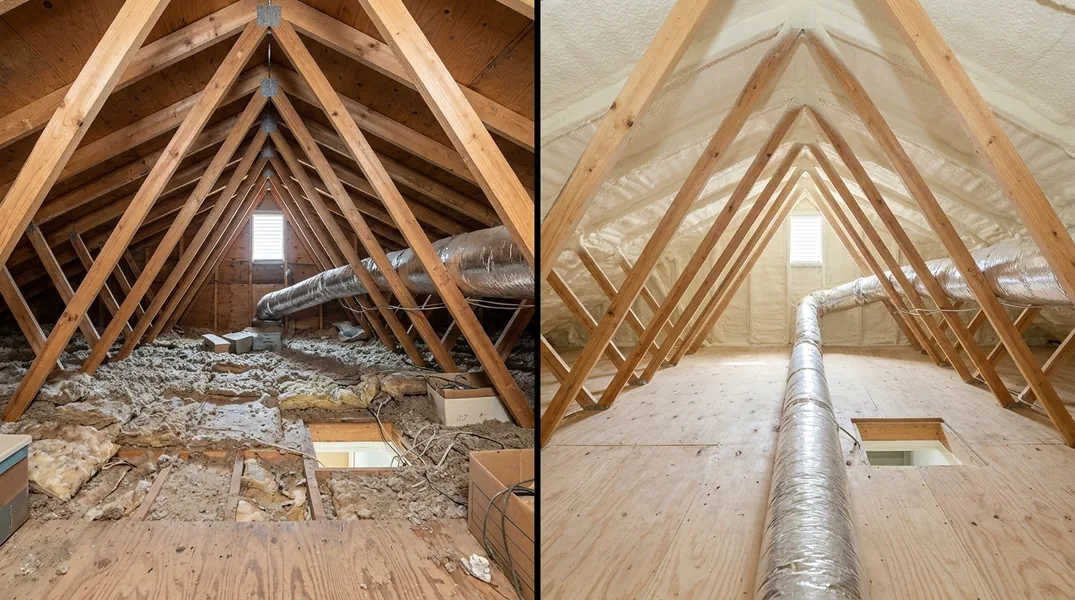
The Challenge of Insulating Historic Bungalows in Wichita
College Hill and Riverside are home to some of Wichita's most charming historic bungalows. Built in the early 1900s, these homes feature original character, vintage craftsmanship, and often, inadequate insulation. Many homeowners in these neighborhoods face a common dilemma: how to improve energy efficiency without damaging the structure or creating hidden moisture problems that could compromise the home's integrity.
The bungalow architecture that makes these homes so appealing also presents unique challenges. Older construction methods, varied wall cavities, and attic spaces that weren't designed with modern insulation in mind require a thoughtful approach. Simply adding insulation without understanding your home's moisture dynamics can lead to condensation, mold growth, and structural decay. This is where modern insulation science meets historic preservation, and understanding your options becomes crucial.
Is Spray Foam Insulation Worth It for Your Bungalow?
When evaluating whether spray foam makes sense for your historic home, the answer depends on your specific situation, budget, and long-term goals. Attic Spray Foam Insulation offers significant advantages in terms of air sealing, thermal performance, and moisture control when installed correctly. Unlike traditional fiberglass batts, spray foam expands to fill every cavity, crack, and void, creating a continuous thermal barrier that reduces drafts and improves comfort year-round.
For bungalows in Wichita, the investment in spray foam can pay dividends through lower heating and cooling bills, fewer drafts, and better humidity control. However, the upfront cost is higher than conventional insulation. The real value emerges over time as energy savings accumulate and your home's structural integrity is preserved. If you're planning to stay in your home long-term and want to maximize comfort and efficiency, spray foam often proves worthwhile. For a clear picture of what this investment looks like for your property, request a free estimate from Wichita Spray Foam Insulation at (316) 618-7858.
Spray Foam Insulation Pros and Cons: What Homeowners Need to Know
Understanding the complete picture of spray foam insulation pros and cons is essential before making a decision. On the positive side, spray foam provides superior air sealing, exceptional R-value per inch, excellent moisture resistance (especially closed-cell varieties), and long-term durability. It adheres to surfaces permanently, doesn't settle over time, and can actually strengthen wall structures. For historic homes where air leakage is a major energy drain, these benefits are substantial.
The cons deserve equal consideration. Installation requires professional application, as improper installation can create problems. The initial cost is significantly higher than fiberglass or cellulose. Some homeowners worry about off-gassing and chemical exposure during and after installation. Additionally, spray foam's impermeability, while beneficial for air sealing, can trap moisture if the home's vapor dynamics aren't properly managed. In older bungalows with existing moisture issues, this requires careful assessment before proceeding. The key is working with experienced professionals who understand your home's unique characteristics and can recommend the right type of foam for your situation.
Is Spray Foam Insulation Safe? Addressing Off-Gassing and Chemical Concerns
Safety is a legitimate concern when considering any insulation product. Is spray foam insulation safe? The short answer is yes, when installed by certified professionals and given adequate time to cure. However, understanding the process helps alleviate concerns. Spray foam is created by mixing two chemical components that react and expand. During and immediately after application, volatile organic compounds (VOCs) are released into the air. This is the off-gassing period, which typically lasts 24 to 48 hours, though some odor may linger longer.
The EPA and industry standards recommend proper ventilation during and after installation, and many professional installers require homeowners to vacate the premises during application. Once fully cured, spray foam becomes inert and poses no ongoing health risk. Spray foam off-gassing concerns are most relevant during the installation window, not afterward. Reputable companies like Wichita Spray Foam Insulation follow strict safety protocols, use products that meet EPA standards, and ensure proper ventilation. If you have respiratory sensitivities or chemical concerns, discuss these with your contractor before scheduling work. They can take additional precautions or recommend alternative products if needed.
Closed Cell vs. Open Cell: Choosing the Right Foam for Moisture Control
For historic bungalows where moisture management is critical, the choice between foam types matters significantly. Closed Cell Spray Foam Insulation features tiny cells that are completely sealed, creating an impermeable barrier. It offers superior R-value per inch (around R-6 to R-7), excellent moisture resistance, and structural reinforcement. Closed-cell foam is ideal for attics and rim joists where moisture intrusion is a concern and space is limited. Its vapor-impermeability makes it particularly valuable in older homes where controlling condensation is essential.
Open Cell Spray Foam Insulation features cells that remain open, allowing moisture vapor to pass through. It offers lower R-value per inch (around R-3.5 to R-4) but costs less and provides better sound dampening. Open-cell foam is more forgiving in homes with existing moisture issues because it allows drying, making it suitable for certain wall cavities where vapor permeability is beneficial. For College Hill and Riverside bungalows, the choice depends on your specific moisture profile, attic ventilation, and whether you're insulating attics, walls, or both. A professional assessment determines which approach protects your home best.
Common Spray Foam Insulation Problems and How to Avoid Them
While spray foam is effective, spray foam insulation problems can occur when installation is rushed, specifications aren't followed, or the home's moisture dynamics aren't properly understood. Common issues include improper application thickness, inadequate ventilation during curing, foam applied over existing moisture (trapping it inside), and incompatibility with certain existing insulation types. In historic bungalows, applying closed-cell foam over damp framing can create condensation zones that promote mold. Poor installation can also result in incomplete coverage, leaving thermal bridges that reduce efficiency.
Prevention starts with choosing an experienced contractor who evaluates your home's condition before recommending a solution. Wichita Spray Foam Insulation conducts thorough assessments, checking for existing moisture, ventilation patterns, and structural issues before any foam is applied. Proper preparation, including moisture remediation if needed, ensures the foam performs as intended. The contractor should also verify that ventilation remains adequate after foam is installed, especially in attics. If you're concerned about potential problems, ask your contractor for a detailed plan explaining how they'll address your home's specific challenges. Quality installation prevents the vast majority of spray foam issues.
Getting Started: Schedule Your Free Estimate Today
If you own a historic bungalow in College Hill, Riverside, or elsewhere in Wichita, and you're ready to explore whether spray foam insulation makes sense for your home, the next step is a professional evaluation. Wichita Spray Foam Insulation offers comprehensive assessments that examine your attic, walls, and existing insulation to recommend the best solution for your situation and budget. There's no obligation, and the insights you gain will help you make an informed decision.
Contact Wichita Spray Foam Insulation today at (316) 618-7858 or request a free estimate online. Our team understands the unique characteristics of older homes and will explain the pros, cons, and realistic expectations for your specific property. Whether you're concerned about energy bills, moisture control, comfort, or long-term preservation, we're here to help you find the right insulation solution for your historic home.
Looking for a professional spray foam insulation contractor in Wichita? Wichita Spray Foam Insulation responds fast for all your spray foam insulation needs.
Get a Free Quote